A WDI letter fits a transaction; a diagnostic termite inspection fits a homeowner who already found something. If you are buying a stone-foundation farmhouse off Poffenberger Road or a 1990s colonial near Valley…
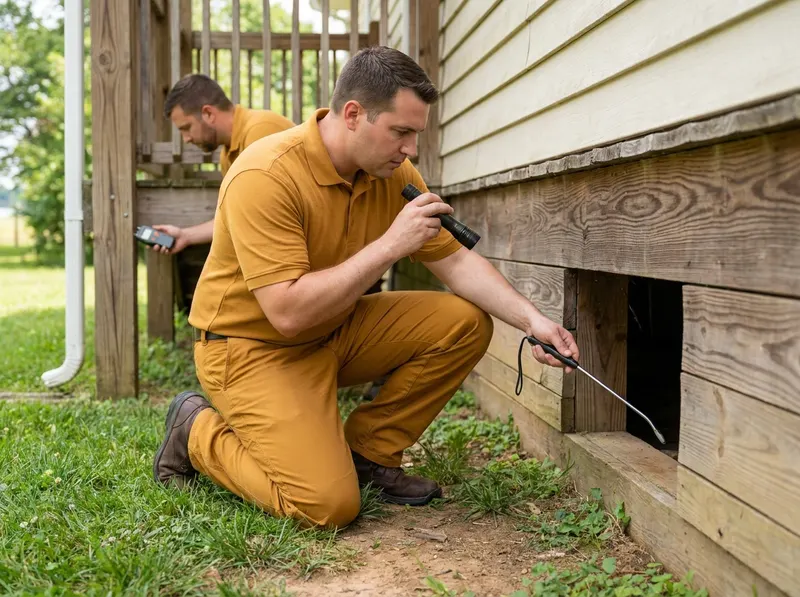
A WDI letter fits a transaction; a diagnostic termite inspection fits a homeowner who already found something. If you are buying a stone-foundation farmhouse off Poffenberger Road or a 1990s colonial near Valley Elementary School, the lender or title company wants a dated form signed by an inspector, and that is the WDI report. If you are the owner and you saw winged swarmers at a basement window in April, or a pencil-width mud tube climbing a Catoctin Creek valley fieldstone wall, the useful product is a findings report with a diagram of where the activity is and how the colony is reaching the wood — the same walkthrough, a different deliverable. The trade-off is worth stating plainly: a WDI report satisfies the paperwork but stops at visible evidence in accessible areas, so finished basement walls, insulated crawlspace ceilings and stored-full garages limit what any inspector can see. We note those limitations on the form instead of guessing.
Jefferson sits on the kind of ground that keeps eastern subterranean termites busy. Homes in the Lander and Petersville stretch, along Broad Run, and out toward Mountville frequently combine three conditions we look for first: soil-contact wood at porch posts and deck stringers, mulch or grade built up above the foundation top, and downspouts dumping at the wall instead of away from it. Older places along Old Middletown Road often have fieldstone or rubble foundations with mortar joints that let termites travel out of sight, and crawlspaces under the Catoctin Creek valley farmsteads run damp for weeks after a wet spring. Farm-adjacent properties near the Middletown Valley fields north of town add stacked lumber, old fence line posts and outbuildings that act as feeder colonies within a few dozen feet of the house.
Our bias shows up in the report. Every inspection lists the conducive conditions we can see — the mulch line, the sagging gutter, the buried siding, the wood-to-soil contact at a shed skirt — because sealing and correcting those is what actually reduces pressure on the structure. Spraying and baiting come after the structure is understood, not instead of it. If activity is found, we quote the treatment separately as a single defined job so you can compare it against anyone else, and there is no requirement to buy a treatment from the inspector who wrote your letter.
We answer our own phone, we do the inspection ourselves, and we are working out of Frederick County rather than routing Jefferson as the last stop on a Frederick schedule. Scheduling around a settlement date is the part most buyers care about, so call with the date first and we will tell you honestly whether we can meet it.
Every job gets a firm, written price after a free on-site visit.
Tell us about your termite inspection and wdi letter job in Jefferson and we'll send a clear, written quote — usually the same day.
 Kryvex Bug Defense