The pressure here is agricultural and it is seasonal. Brown marmorated stink bugs feed through summer in the soybean, corn and orchard ground of the Middletown Valley north of town and along the Catoctin Creek…
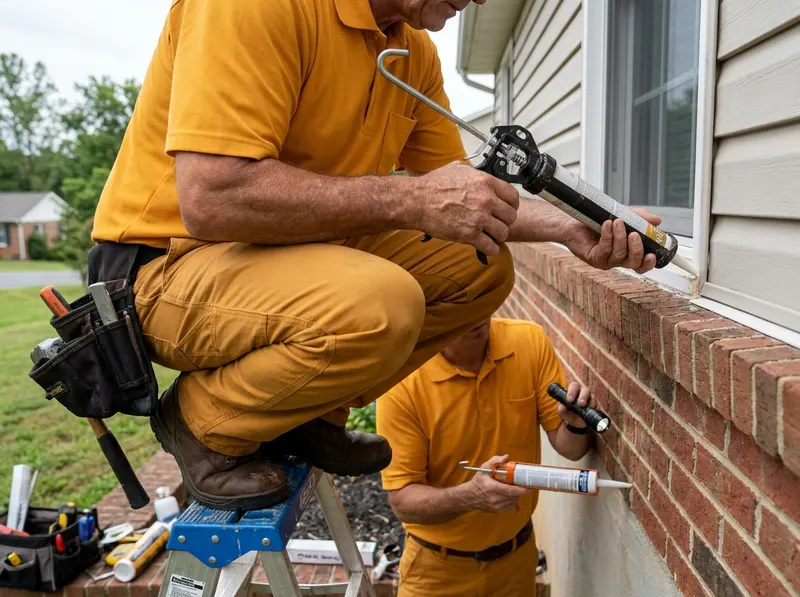
The pressure here is agricultural and it is seasonal. Brown marmorated stink bugs feed through summer in the soybean, corn and orchard ground of the Middletown Valley north of town and along the Catoctin Creek bottomland, then move to structures when nights cool. On a warm 65-degree afternoon in late September or October, they stack on the sunniest wall they can find — usually the south or west elevation — and walk upward until they find a seam. That is why two houses 300 feet apart on the same road can have completely different problems: orientation, siding type and treeline distance decide it. Homes on the Holter Road corridor, the Poffenberger Road area and the Burkittsville Road (MD 383) stretch that back to standing woods or open field tend to load the heaviest.
The building itself dictates the fix. Fieldstone and rubble foundations on the older farmhouses along Old Middletown Road and the Catoctin Creek valley farmsteads leak at the sill plate, at the rim joist, and around basement window frames set into stone — those are mortar, foam and mesh repairs, not spray targets. The 1990s and 2000s subdivisions near Valley Elementary School on Jefferson Pike and out through Lander, Petersville, Broad Run and Mountville have a different signature: unscreened gable vents, gaps behind shutters, unsealed siding starter strips, and soffit-to-fascia seams where stink bugs slip straight into the attic and reappear at bathroom light fixtures in March. Sealing the attic envelope is what stops the spring re-emergence that spray-only programs never touch.
When does exclusion fit versus a simple exterior treatment? Exclusion is the right call if bugs are showing up inside the living space, if you are seeing them again in late winter, if the house has an attic you can hear activity in, or if you plan to stay in the home for years — it is one-time construction work that keeps paying. A fall exterior barrier treatment alone fits a narrower case: a rental you do not own the envelope of, siding scheduled for replacement, an active mass on the wall you need knocked down this week, or a tighter budget where you want the cheapest reduction available. The trade-off is honest — spray reduces what lands, sealing reduces what enters, and the exterior residual is a follow-up to exclusion rather than a substitute for it.
Best results come from sealing before the migration, ideally late August through September, since insects already inside a wall void cannot be sprayed out of it. Work booked in October and November still helps — it cuts next year's population and shuts out the mice that use the identical gaps once frost arrives. We inspect, show you the openings we found, price the job as one problem, and leave. No annual agreement is required to get exclusion work done in Jefferson.
Every job gets a firm, written price after a free on-site visit.
Tell us about your stink bug and overwintering pest exclusion job in Jefferson and we'll send a clear, written quote — usually the same day.
 Kryvex Bug Defense